

Best kneeling stool chair: Jobri BetterPosture® Jazzy Kneeling Chair; BP1446. Best clinical alternative: Ergonomic Surgeon Chair with FootRest for Precision Surgical and Dental Work. Best petite saddle option: Small Ergonomic Saddle Seat Stool for Petite Women. This 2026 guide separates kneeling seating from saddle stools and task chairs so you can match the seat to your desk or clinical workspace.
- The Jobri BetterPosture Jazzy BP1446 is the kneeling stool chair pick for buyers seeking seated shin support.
- Sithealthier offers kneeling chairs, saddle stools, and clinical seating; choose by task rather than posture claims.
- Consider a Surgeon Chair for clinical work and a mesh task chair for conventional desk seating.
- Check seat height, leg clearance, adjustment controls, and foot support before choosing any chair.
Why this matters
A kneeling chair is not a saddle stool. Kneeling seating combines a seat with lower-leg support; a saddle stool supports you on a saddle-shaped seat without that kneeling arrangement. A conventional task chair provides another distinct sitting setup.
For dental and medical professionals, the decision starts with the task. Charting at a desk, moving beside a patient, and working at a surgical workstation impose different clearance requirements. Do not select clinical seating solely because it looks suitable for a home-office desk.
Sithealthier offers ergonomic seating across these categories. The useful comparison is which configuration fits your work—not which chair makes the strongest posture promise.
What makes the best kneeling stool chair?
Use these criteria to assess a kneeling chair in 2026 before comparing it with other ergonomic seating:
- Task fit: Separate keyboard work from patient-facing work. Decide where you need to sit, reach, turn, and stand.
- Seat and leg support: Assess both the main seat and the lower-leg pads. Cushion material alone does not establish a comfortable fit.
- Working height: Confirm the chair's actual seat-height range against your desk, keyboard, or treatment surface.
- Clearance: Check space for your thighs, lower legs, chair frame, and any nearby foot controls.
- Adjustment: Identify which settings you can change and whether you can reach the controls while seated.
- Position changes: Choose a configuration you can enter, leave, and reposition without disrupting your task.
A chair passes only when the whole setup works. A comfortable seat that leaves your keyboard too high is still the wrong desk arrangement.
Best kneeling chairs and alternatives at a glance
Only the Jazzy BP1446 below is a kneeling chair. The remaining options are alternatives for buyers whose body fit, clinical task, or preference for back support points elsewhere.
| Item | Best for | Standout feature | Key limitation |
|---|---|---|---|
| Jobri BetterPosture Jazzy BP1446 | Kneeling seating at a desk | Memory Foam cushions and polished aluminum features | Lower-leg support must suit your body and desk clearance |
| Ergonomic Surgeon Chair with FootRest | Surgical and dental seating comparisons | Surgeon-chair configuration with a footrest | Clinical fit requires checking the actual workstation |
| Salli SMALL-MultiAdjuster | A narrower saddle with adjustable seat width | Two-part seat with width and angle adjustment | Saddle seating does not provide kneeling-style shin support |
| Small Ergonomic Saddle Seat Stool for Petite Women | Petite buyers within its stated fit guidance | Designed for smaller users | Its stated size guidance excludes many buyers |
| Nightingale IC2 7300 | Conventional desk seating with a mesh back | Mid-back, all-mesh task-chair format | Not a kneeling or saddle seating configuration |
1. Jobri Jazzy BP1446: best kneeling stool chair for desk use
The Jobri BetterPosture® Jazzy Kneeling Chair; BP1446 is the direct match for buyers seeking a kneeling stool chair. Its listed features include Memory Foam cushions and polished aluminum features.
Start here if you specifically want a kneeling arrangement rather than a saddle seat. Evaluate the lower-leg support as carefully as the seat: you need room to settle into the chair and get out again without catching the frame beneath your desk.
Jobri Jazzy BP1446 pros:
- Matches the kneeling-chair category directly.
- Includes Memory Foam cushions.
- Provides an alternative to conventional desk seating.
Jobri Jazzy BP1446 cons:
- The kneeling arrangement adds lower-leg contact that you must assess personally.
- The frame and leg-support position require a desk-clearance check.
- Cushion material does not establish suitability for an entire workday.
Best for: Desk users who deliberately want kneeling seating and can evaluate its fit at their workstation.
Before choosing the Jazzy BP1446 in 2026, confirm its seat-height range and adjustment options. Do not infer adjustability from the chair's appearance or assume that every desk accommodates its frame.
Verdict: Buy only after confirming that the kneeling arrangement fits your desk and feels comfortable.
2. Surgeon Chair with FootRest: best for clinical task comparisons
The Ergonomic Surgeon Chair with FootRest for Precision Surgical and Dental Work belongs on a clinical shortlist, not in a list of kneeling chairs presented as interchangeable products. Its stated configuration includes a footrest and identifies surgical and dental work as its intended use.
For patient-facing work, check the seating arrangement against the treatment position. You need to assess access around the patient chair, nearby equipment, and any pedals before deciding whether the configuration fits.
Ergonomic Surgeon Chair with FootRest pros:
- Explicitly identified for surgical and dental work.
- Includes a footrest.
- Provides a clinical alternative to desk-focused kneeling seating.
Ergonomic Surgeon Chair with FootRest cons:
- A footrest does not establish compatibility with your clinical pedals.
- The product category does not establish suitability for a particular procedure.
- It does not offer the same seating arrangement as a kneeling chair.
Best for: Medical and dental professionals comparing task-specific seating for their actual clinical workspace.
Use the guide to choosing a surgeon chair for medical and dental work to structure that comparison. Check dimensions, controls, materials, and support placement before selecting a configuration.
Verdict: Hold until the chair's specifications match your clinical task and workspace.
3. Salli SMALL-MultiAdjuster: best for adjustable saddle width
The Salli SMALL-MultiAdjuster Saddle Chair with Narrower & Adjustable Seat Width offers a narrower, two-part saddle seat. Its description specifies adjustment of both seat width and seat angle.
Those adjustments make the Salli SMALL-MultiAdjuster relevant when seat shape and width are your main selection issues. It remains a saddle chair: choose it because you want that arrangement, not because it resembles a substitute for kneeling pads.
Salli SMALL-MultiAdjuster pros:
- Uses a narrower, two-part seat.
- Allows seat-width adjustment.
- Allows seat-angle adjustment.
Salli SMALL-MultiAdjuster cons:
- Width adjustment does not establish the correct seat height for your desk.
- The saddle shape requires its own fit assessment.
- It does not provide kneeling-style lower-leg support.
Best for: Buyers seeking a narrower saddle seat with width and angle settings rather than a kneeling configuration.
For a dental workspace, assess how the selected seating position works around the patient chair. The dental hygienist saddle-stool operatory fit checklist provides a task-specific starting point.
Verdict: Buy if adjustable saddle width is your priority and the complete chair fits your workstation.
4. Small Saddle Seat Stool: best for petite-user screening
The Small Ergonomic Saddle Seat Stool for Petite Women has explicit fit guidance: it is designed for users approximately 5 ft 2 in or shorter and weighing 125 lb or less. Use those measurements as an initial screening step, not as a guarantee of comfort.
Although the product title names women, the description frames the fit around petite users. Compare your measurements and work requirements rather than treating the title alone as a fit assessment.
Small Ergonomic Saddle Seat Stool pros:
- Provides stated height guidance for smaller users.
- Provides stated bodyweight guidance.
- Offers a saddle-seat option specifically described for petite users.
Small Ergonomic Saddle Seat Stool cons:
- The stated fit guidance limits who should shortlist it.
- Body height alone does not establish desk compatibility.
- It is not a kneeling chair and provides a different seating arrangement.
Best for: Petite buyers within the stated guidance who want to evaluate saddle seating.
For your 2026 shortlist, confirm the minimum seat height and your foot support before ordering. A smaller seat does not automatically mean the entire chair sits low enough for your desk.
Verdict: Skip if you fall outside its stated fit guidance; otherwise assess the full dimensions.
5. Nightingale IC2 7300: best for conventional mesh seating
The Nightingale Chair - IC2 Mid Back All Mesh Ergonomic Task Chair; 7300 uses a mid-back, all-mesh task-chair format. It is the conventional desk-seating alternative in this comparison.
Choose this category when you want a backrest and do not want kneeling-style lower-leg support. For medical and dental professionals, evaluate it for desk-based tasks separately from seating used beside a patient.
Nightingale IC2 7300 pros:
- Includes a mid-back configuration.
- Uses an all-mesh format.
- Provides a conventional alternative to kneeling and saddle seating.
Nightingale IC2 7300 cons:
- Does not provide a kneeling arrangement.
- Does not provide a saddle-shaped seat.
- A task-chair label alone does not establish fit for clinical work.
Best for: Home-office buyers and clinicians selecting seating for charting or other conventional desk work.
Confirm the seat dimensions, adjustment range, and control functions. The listed format tells you what category it belongs to; your measurements determine whether it belongs at your desk.
Verdict: Buy if conventional back-supported seating matches your task better than kneeling or saddle seating.
Check the workspace before choosing the chair
For a 2026 purchase, record your working-surface height and the available space beneath it. Then compare those measurements with the chair's specifications and the position your legs will occupy.
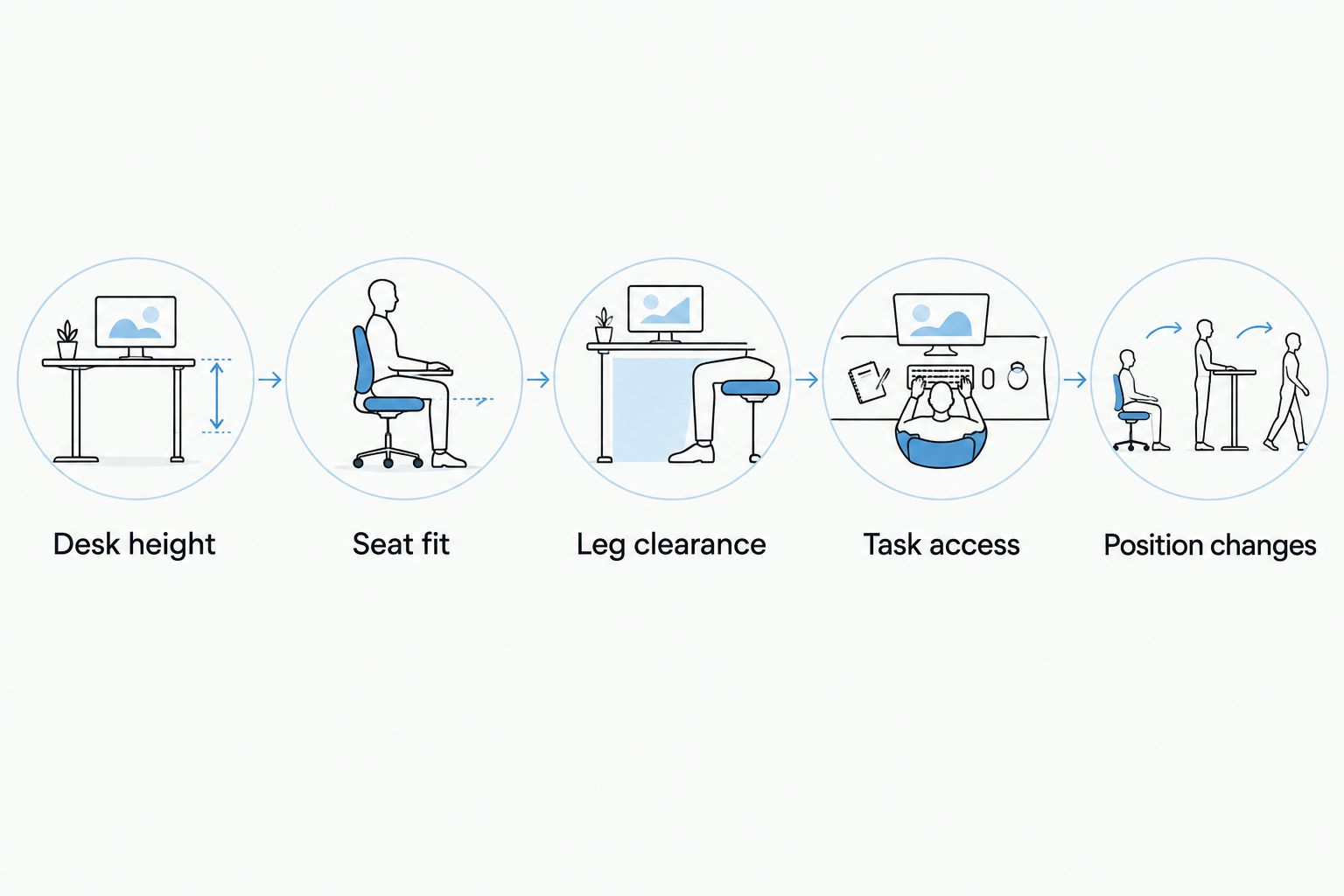
Use this sequence rather than judging the seat in isolation:
- Desk height: Identify the keyboard or treatment position you need to reach.
- Seat fit: Check the seat shape, dimensions, and available adjustments.
- Leg clearance: Account for lower-leg pads, footrests, frames, and nearby equipment.
- Task access: Check your route into the chair and your access to tools or controls.
- Position changes: Confirm that you can leave and reposition the chair without obstruction.
For clinical seating, distinguish chair-height controls from equipment pedals. Review the comparison of dental saddle-stool hand controls and foot controls before deciding which control arrangement fits your work.
These product references let you compare the different seating formats. Check the current specifications for your selected configuration before ordering.


How the ranking works
The ranking puts category match first, followed by clinical task fit, seat-width adjustment, petite-user guidance, and conventional desk support. These are distinct selection priorities, not a claim that one seating design produces better health outcomes.
Sithealthier's kneeling stool chair comparison separates product features from fit decisions. Neither an ergonomic label nor a cushion material proves that a chair will be comfortable for you.
Which seating option should you choose?
Choose the Jobri Jazzy BP1446 if you specifically want a kneeling stool chair. It is the default pick here because it matches that category; confirm its dimensions and adjustment options before committing.
For clinical work, compare the Surgeon Chair with your procedure and equipment requirements. Choose the Salli SMALL-MultiAdjuster for adjustable saddle width, the petite stool for its stated size guidance, or the Nightingale IC2 7300 for conventional mesh desk seating.
For 2026, the deciding question remains practical: can you perform your real task comfortably, reach your controls, and change position in this setup?
FAQ
What's the best kneeling stool chair in this comparison?
The Jobri BetterPosture Jazzy BP1446 is the kneeling stool chair pick in this comparison. Its listed features include Memory Foam cushions and polished aluminum features; confirm dimensions and adjustments against your desk.
Is a kneeling chair the same as a saddle stool?
No. A kneeling chair combines a seat with lower-leg support, while a saddle stool uses a saddle-shaped seat without that kneeling arrangement.
Should a dental professional choose a kneeling chair?
Choose clinical seating by the task and workspace, not by the kneeling-chair label. Check patient access, equipment clearance, and control access before selecting a chair for treatment work.
Which option has adjustable saddle-seat width?
The Salli SMALL-MultiAdjuster has a narrower, two-part seat with adjustable width and angle. It is a saddle chair rather than a kneeling chair.
Which saddle stool is described for petite users?
The Small Ergonomic Saddle Seat Stool for Petite Women is described for users approximately 5 ft 2 in or shorter and weighing 125 lb or less. Confirm its complete dimensions and seat-height range before choosing it.
Will a kneeling stool chair cure back pain?
A kneeling stool chair should not be treated as a cure for back pain. Choose seating for fit and task requirements, and seek qualified medical advice for persistent symptoms.
What should I measure before buying a kneeling chair?
Measure your working-surface height and the usable clearance beneath the desk. Compare those measurements with the chair's seat-height range, frame dimensions, and lower-leg support position.
One last thing
Test the exit, not just the sitting position. A chair must let you stand, turn, and return to work without fighting the desk or surrounding equipment. Sithealthier's ergonomic seating choices span different tasks; the right category is the one that fits the way you actually work.
Leave a comment